Overland Park: 913-444-9365

Have you ever sat in the dental chair and wondered exactly what your hygienist is doing? You are not alone. Inside your professional cleaning, every tool explained step by step in Gladstone can feel like a mystery — but it does not have to be. At Petal Dental, Dr. Yashoni Shah and our team believe informed patients are healthier patients. Understanding each phase of your cleaning helps reduce anxiety and shows you why these appointments matter so much.
Professional cleanings are about far more than polished teeth. They are a critical part of your long-term oral health. Let us walk you through exactly what happens from the moment you sit down to the moment you leave.
Step One: The Initial Exam and Your Dental Charting
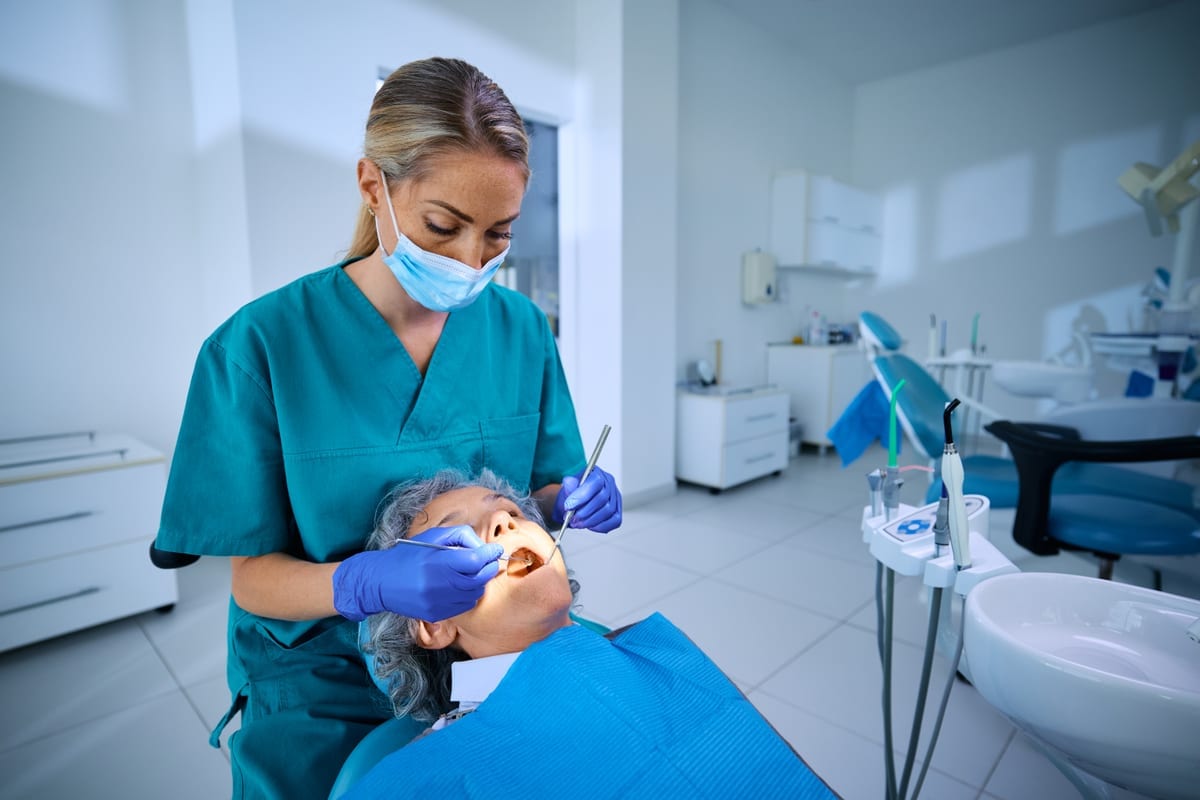
Before any tools come out, your hygienist takes a careful look at your mouth. This first step involves a visual examination of your teeth, gums, and soft tissues. They are checking for signs of inflammation, unusual spots, or anything that needs Dr. Shah’s attention.
Next comes dental charting. The hygienist calls out numbers while probing gently around each tooth. Those numbers measure the depth of the pockets between your teeth and gums. Healthy pockets measure between one and three millimeters. Deeper numbers can indicate early gum disease.
This step also includes a review of your digital X-rays. Digital X-rays allow our team to see bone levels, decay between teeth, and issues invisible to the naked eye. They use far less radiation than traditional film X-rays and produce instant, clear images.
Inside Your Cleaning: Every Scaling Tool Explained Step by Step in Gladstone
Once the exam is complete, the real cleaning begins. This phase is called scaling, and it is where your hygienist removes plaque and tartar buildup. Two main tools do this work.
The first is an ultrasonic scaler. This vibrating tool uses water to break apart larger deposits of tartar. It makes a buzzing sound and produces a fine mist of water. Many patients find it more comfortable than older metal instruments.
The second tool is a hand scaler, also called a curette. Your hygienist uses this to carefully scrape away stubborn deposits in tight spaces around each tooth and under the gumline. Different curettes are shaped for different areas of the mouth.
- Ultrasonic scaler: Removes large tartar deposits quickly using vibration and water
- Sickle scaler: Targets calculus buildup above the gumline on anterior teeth
- Curette: Cleans below the gumline and around curved tooth surfaces
- Explorer hook: Detects rough areas or remaining deposits after scaling
This process requires skill and patience. Your hygienist works tooth by tooth to ensure every surface is clean. The time this takes depends on how much buildup is present.
Polishing, Flossing, and Fluoride: The Finishing Steps
After scaling, your hygienist uses a rubber cup prophy angle attached to a slow-speed handpiece. This tool applies a gritty paste called prophylaxis paste to polish away surface stains. The paste comes in different grits, and your hygienist chooses based on your needs.
Polishing removes extrinsic stains from coffee, tea, and food. It also smooths the tooth surface, making it harder for plaque to stick. The rubber cup spins gently against each tooth for a few seconds.
Next comes professional flossing. Your hygienist threads floss between every contact point. This removes any remaining debris and checks for tight spots or bleeding areas. Bleeding during flossing often signals gum inflammation — important information for Dr. Shah.
Many appointments end with a fluoride treatment. A tray filled with fluoride gel or foam sits over your teeth for about one minute. Fluoride strengthens enamel and helps prevent future cavities. It is especially beneficial for children, but adults benefit too.
- Prophy paste polishes away surface stains and smooths enamel
- Professional flossing clears debris and checks gum health between teeth
- Fluoride treatment fortifies enamel and reduces cavity risk
- A rinse removes any residual paste or fluoride from your mouth
Oral Cancer Screening: The Step Most Patients Do Not Expect
One of the most important parts of your visit happens quietly and quickly. Dr. Yashoni Shah or your hygienist performs an oral cancer screening during your appointment. This involves examining the lips, tongue, cheeks, floor of the mouth, and throat.
They look for unusual sores, red or white patches, lumps, or asymmetry. Early detection of oral cancer dramatically improves treatment outcomes. Most patients are unaware this screening is even happening.
This is also when Dr. Shah may discuss additional preventive options like dental sealants. Sealants coat the grooves of back teeth where decay often starts. They are a simple, painless way to add an extra layer of protection — particularly for children and teens.
If Dr. Shah notices anything concerning — whether related to gum disease, decay, or alignment — she will discuss it with you at this point. She may refer to services like Invisalign Gladstone if crowding is contributing to cleaning challenges. For urgent concerns discovered during your exam, she may also mention Emergency Dentistry Gladstone as a resource if you ever need same-day care.
Why Regular Cleanings in Gladstone Matter More Than You Think
A professional cleaning removes what brushing and flossing at home simply cannot. Tartar hardens onto teeth and requires professional tools to remove safely. Skipping cleanings allows buildup to accumulate, increasing the risk of gum disease and cavities.
Most adults need a cleaning every six months. Some patients with gum disease benefit from more frequent visits — every three to four months. Dr. Shah tailors your schedule based on your individual needs.
Regular cleanings at Petal Dental also give our team a consistent baseline of your oral health. Changes over time are easier to catch early. Early intervention is almost always simpler, less invasive, and more affordable than treating advanced problems.
Patients across Gladstone, MO trust our team because we take the time to explain what we are doing and why. You will never leave wondering what just happened in your mouth.
Frequently Asked Questions
How long does a professional cleaning take at Petal Dental?
Most routine cleanings at Petal Dental take between 45 and 60 minutes. This includes the exam, X-rays, scaling, polishing, and fluoride. Patients with heavier tartar buildup or gum concerns may need a longer appointment.
Does a professional cleaning hurt?
Most patients experience little to no discomfort during a standard cleaning. Sensitivity is more common if you have inflamed gums or heavy tartar buildup. Your hygienist can adjust their technique or use topical numbing gel if needed.
How often should I get my teeth professionally cleaned in Gladstone?
Most adults should schedule a professional cleaning every six months. Dr. Shah may recommend more frequent visits if you have active gum disease, a history of heavy tartar buildup, or other risk factors that increase your need for preventive care.
What is the difference between a regular cleaning and a deep cleaning?
A regular cleaning, called a prophylaxis, removes plaque and tartar above and just below the gumline in healthy or mildly inflamed mouths. A deep cleaning, called scaling and root planing, targets bacteria and buildup below the gumline and is used to treat gum disease. Dr. Shah will recommend the appropriate treatment based on your exam results.
Can children get professional cleanings at Petal Dental?
Yes, absolutely. Petal Dental provides family dentistry services for patients of all ages, including children. Early cleanings help establish good habits, allow us to apply dental sealants when appropriate, and catch developmental concerns early. We recommend bringing children in as soon as their first tooth appears.
Your oral health is one of the most important investments you can make. Our team at Petal Dental in Gladstone, MO is here to make every appointment comfortable, clear, and worthwhile. Book Now to schedule your appointment with our team.