Overland Park: 913-444-9365

A professional teeth cleaning does far more than polish your smile. Understanding what happens inside your professional teeth cleaning — what hygienists find and why it matters in Gladstone — helps you feel confident and prepared at every visit. At Petal Dental, Dr. Yashoni Shah and our hygiene team treat every appointment as a full assessment of your oral health, not just a quick polish. Here is exactly what to expect, step by step.
Step One: Your Hygienist Reviews Your Health History and Examines Your Mouth
Before any tools come out, your hygienist takes time to review your medical history. Certain medications and health conditions directly affect your gum tissue and saliva. Knowing this context helps us customize your cleaning safely and effectively.
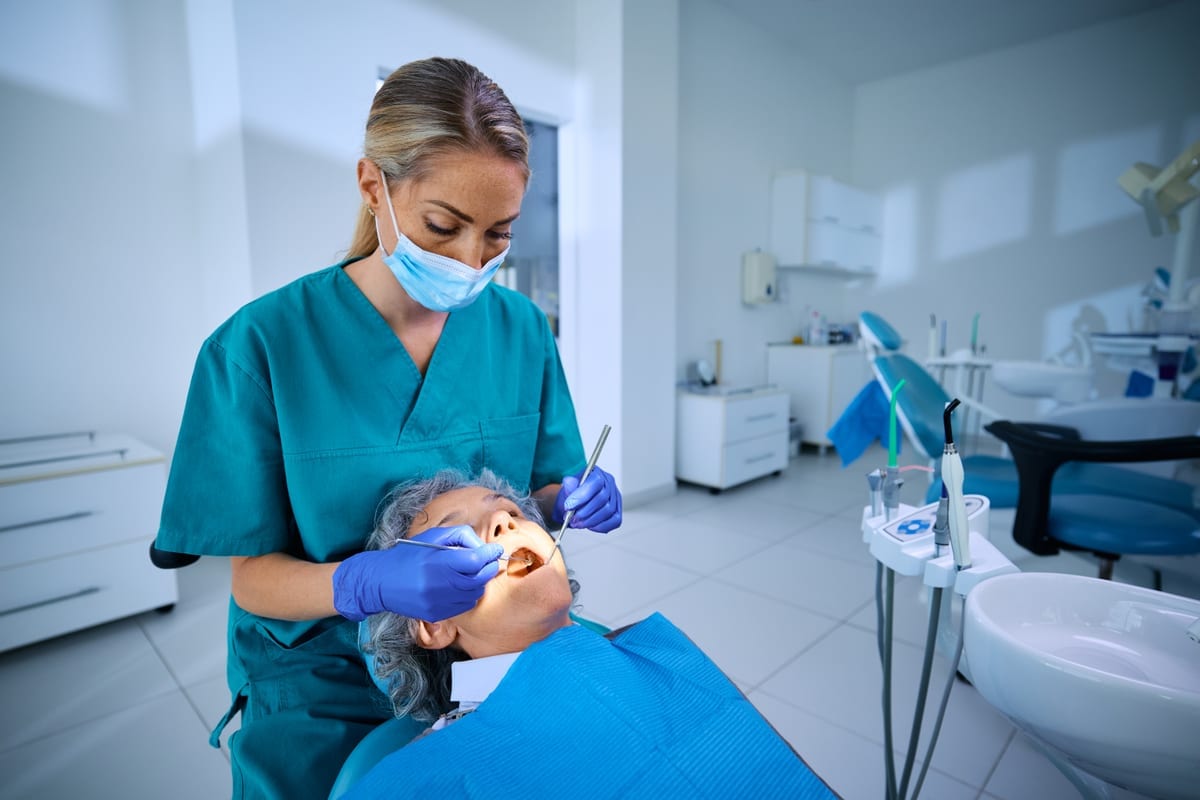
Next comes a thorough visual exam of your teeth, gums, and soft tissues. Your hygienist uses a small mirror to check every surface, including areas you cannot easily see at home. This initial look often reveals early warning signs that would otherwise go unnoticed for months.
During this phase, your hygienist also measures the depth of the pockets between your teeth and gums. A healthy pocket measures one to three millimeters. Deeper pockets can signal early or advanced gum disease, making this measurement one of the most important numbers in your dental record.
Step Two: Scaling — What Hygienists Are Actually Removing in Gladstone
Scaling is the core of a professional cleaning. Your hygienist uses specialized hand scalers and an ultrasonic scaler to remove tartar — also called calculus — from your teeth. Tartar is hardened plaque that your toothbrush simply cannot remove, no matter how well you brush at home.
The ultrasonic scaler vibrates at a high frequency and uses a water stream to break apart deposits. It is especially effective below the gumline, where bacteria tend to accumulate and cause the most damage. Most patients feel only mild vibration and cool water during this step.
- Tartar buildup is the leading cause of gum inflammation
- Scaling removes deposits above and below the gumline
- Ultrasonic tools reach areas hand scalers may miss
- Regular scaling prevents the need for deeper periodontal treatments
- Skipping cleanings allows tartar to accumulate quickly between visits
After scaling, your hygienist inspects each tooth surface again. Any remaining deposits get addressed before moving on. Thoroughness at this stage directly protects your gum health over the coming months.
Step Three: Polishing, Flossing, and Fluoride Treatment
Once scaling is complete, your hygienist uses a slow-speed handpiece with a soft rubber cup and gritty prophylaxis paste to polish your teeth. This step removes surface stains and any residual plaque missed during scaling. The result is a smooth, clean surface that is harder for new plaque to cling to.
Professional flossing comes next. Your hygienist guides floss between every contact point, checking for tight spots, bleeding, and any areas of concern. This step also cleans the interproximal surfaces — the sides of teeth — where cavities commonly form.
Many patients at Petal Dental also receive a fluoride treatment after polishing. Fluoride strengthens enamel and significantly reduces cavity risk. It is applied as a foam, gel, or varnish and takes only a minute or two to complete.
- Polishing smooths tooth surfaces and removes surface stains
- Flossing clears debris and checks for gum bleeding patterns
- Fluoride varnish is applied and sets within seconds
- Patients are asked to avoid eating or drinking for 30 minutes after fluoride
Step Four: Digital X-Rays and the Dentist Exam
Depending on your history and last X-ray date, your hygienist or assistant may take digital X-rays during your visit. Digital X-rays use significantly less radiation than traditional film and produce instant, high-resolution images. Dr. Shah uses these images to detect cavities between teeth, bone loss, and any concerns hidden beneath the gumline.
After your cleaning, Dr. Yashoni Shah performs a comprehensive exam. She reviews your X-rays, checks every tooth for decay, evaluates your bite, and examines your soft tissues for any abnormalities. This is also when an oral cancer screening takes place — a quick but potentially life-saving check of your lips, tongue, cheeks, and throat.
If Dr. Shah identifies any concerns, she explains them clearly and outlines your options. No pressure, no jargon — just honest, educational conversation about what she found and what it means for your long-term health.
What Hygienists Commonly Find During Cleanings — And What It Means for You
Hygienists see patterns at every appointment. Early-stage gingivitis — red, puffy, or bleeding gums — is among the most common findings. The good news is that gingivitis is fully reversible with professional cleaning and improved home care.
Cracked teeth, worn enamel from grinding, and early cavities between teeth are also frequently discovered during cleanings. Catching these issues early prevents them from becoming more serious — and more costly to treat. Routine visits truly serve as your first line of defense.
Some patients need a referral for additional services. For example, a patient experiencing significant tooth pain may need Emergency Dentistry Gladstone care to address an urgent issue. Others with crowding concerns may be good candidates for Invisalign Gladstone treatment, which Dr. Shah can discuss during the exam portion of your visit.
How Often Should Gladstone Patients Schedule Professional Cleanings?
Most adults benefit from a professional cleaning every six months. However, patients with gum disease, a history of heavy tartar buildup, or certain medical conditions may need visits every three to four months. Dr. Shah and your hygienist will recommend a schedule tailored specifically to your needs.
Children also benefit from regular cleanings starting around age one or when their first tooth erupts. Early dental visits build healthy habits and allow the team to monitor development closely. Petal Dental welcomes patients of all ages from across the Gladstone community.
Consistency matters more than most patients realize. Each cleaning builds on the last, keeping your oral environment stable and dramatically reducing your risk of serious dental disease over time.
Conclusion: Your Cleaning Is More Than a Polish
A professional teeth cleaning at Petal Dental is a comprehensive health assessment from start to finish. Dr. Yashoni Shah and her team use every step — from pocket measurements to digital X-rays — to protect your smile and catch problems early. Gladstone patients who commit to routine cleanings consistently experience better oral health outcomes over time. Book Now to schedule your appointment with our team.
Frequently Asked Questions
Does a professional teeth cleaning hurt?
Most patients experience little to no discomfort during a cleaning. If you have sensitive gums or significant tartar buildup, you may feel some pressure or mild sensitivity. Our hygienists work at your pace and can pause at any time to make you more comfortable.
How long does a professional teeth cleaning take in Gladstone?
A standard cleaning appointment at Petal Dental typically takes 60 to 90 minutes. This includes the hygiene exam, scaling, polishing, X-rays if needed, and the dentist exam with Dr. Shah. First-time patients may need a few additional minutes for their initial health history review.
What is the difference between a regular cleaning and a deep cleaning?
A regular cleaning — called prophylaxis — removes tartar and plaque above and just below the gumline in patients with healthy gums. A deep cleaning, or scaling and root planing, is a more intensive procedure used to treat gum disease. It goes significantly deeper below the gumline and typically requires local anesthesia.
Can a teeth cleaning reveal signs of oral cancer?
Yes. Dr. Shah performs an oral cancer screening as part of every comprehensive exam. She checks the lips, tongue, cheeks, floor of the mouth, and throat for any unusual tissue changes. Early detection dramatically improves treatment outcomes, which is why this screening is included at every visit.
How should I prepare for my teeth cleaning appointment?
Brush and floss before your appointment as you normally would. Arrive a few minutes early if it is your first visit to complete any paperwork. Let your hygienist know about any changes to your health, medications, or concerns you have noticed since your last visit — every detail helps us provide better care.